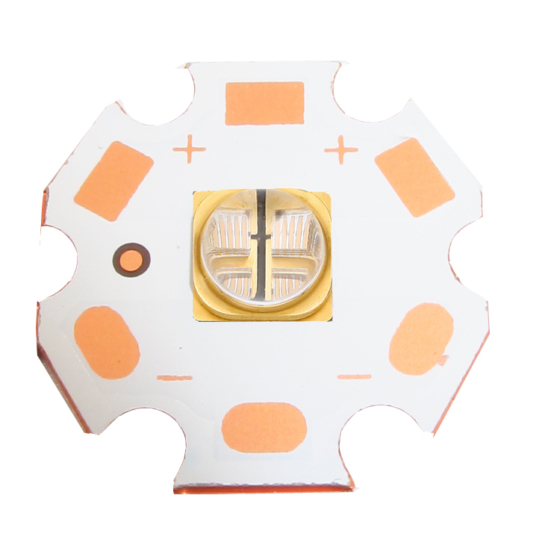
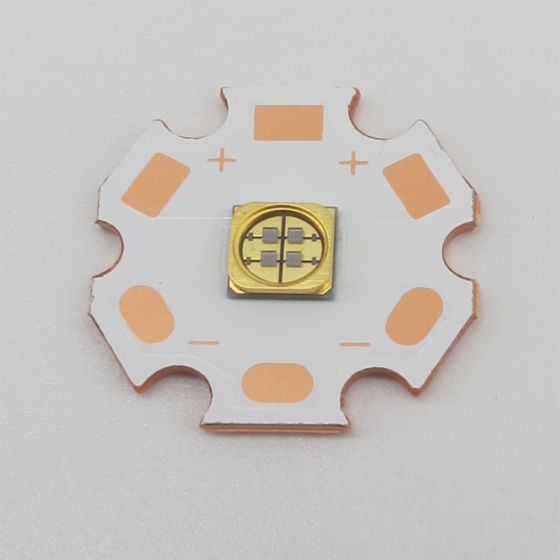
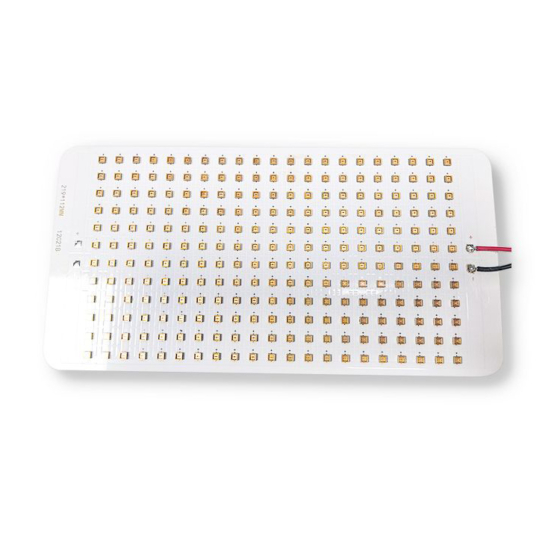
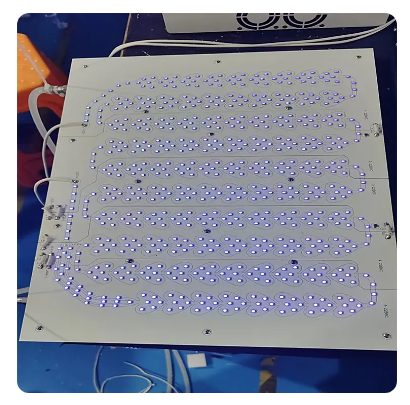
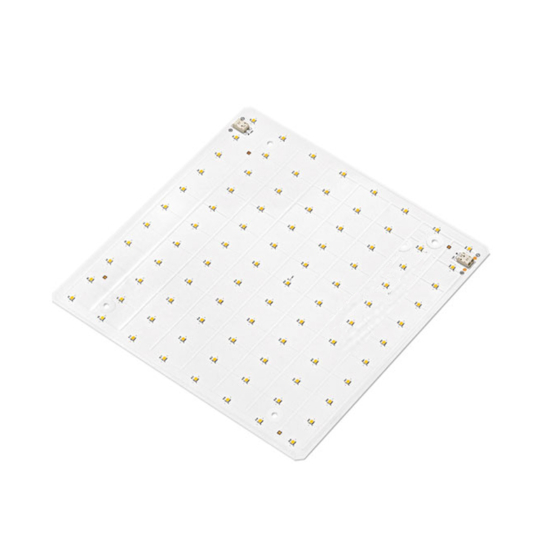
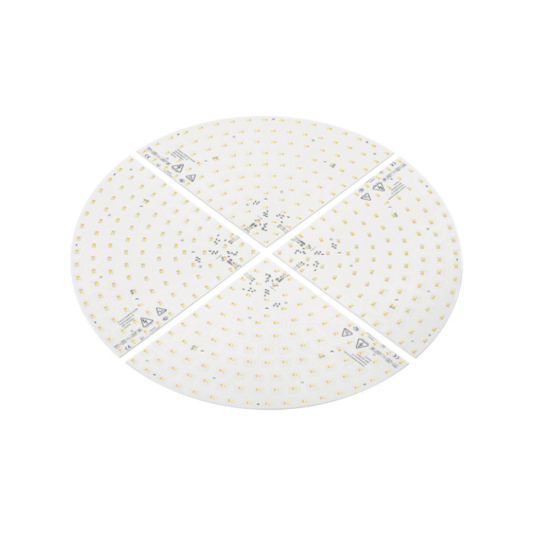
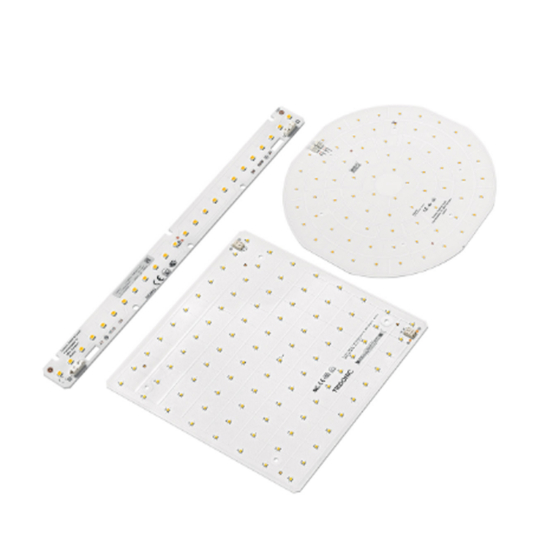
 LED Solar Simulator PCBA-Boardmodul 200-1750nm

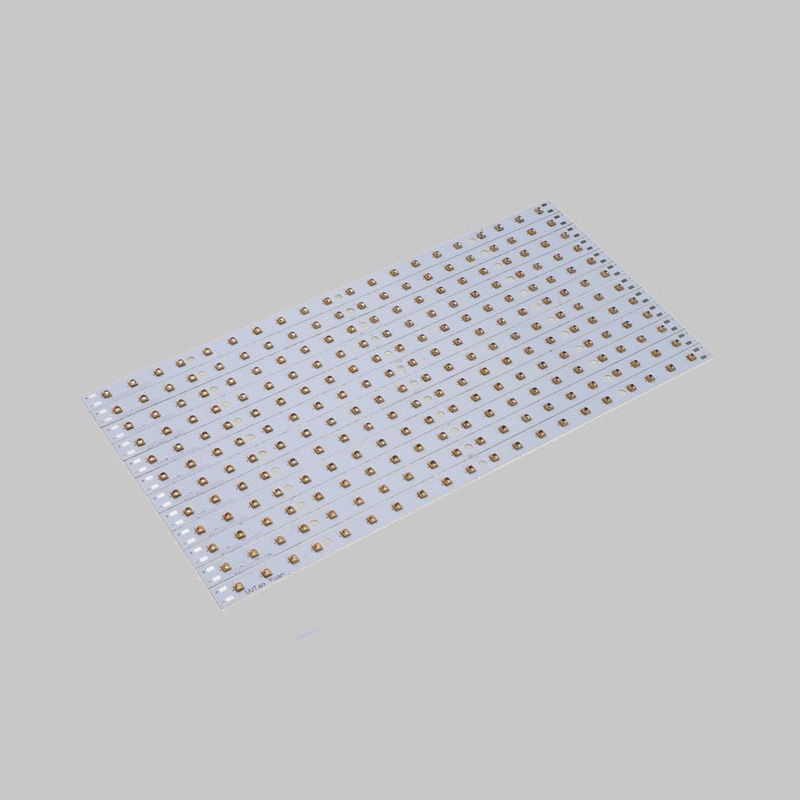
UV-C LED Technology
UVC-based disinfection, often called, Ultraviolet germicidal irradiation (UVGI), is the use of ultraviolet (UV) light to kill or inactivate viral, bacterial, and fungal species. When UV-C light is incident upon the target, the incident photons are absorbed by DNA or RNA, causing inactivation of the DNA or RNA double helix strands through the formation of molecular lesions. When enough of these lesions are created, the replication process is disrupted, and the cell cannot replicate. Absorption by proteins can lead to the breakdown of the organism’s cell walls causing the cell to die. For most commercial applications, replication prevention is sufficient. The UV doses required to prevent replication are much lower than required to kill, making the cost of UV treatment to prevent infection commercially viable
UVC LED Disinfection
UV-C based LEDs are a relatively new technology. Examples of wavelengths currently commercially available include 255nm, 265nm, 275nm, and 222nm. Jedoch, UV-C LED technology entwickelt sich rasant, und im Laufe der Zeit werden neue Wellenlängen entwickelt, Die Kosten werden sinken und die Effizienz wird steigen, wie es bereits bei den roten Zahlen der Fall war, Infrarot, Blau, und UV-A-Wellenlängen-LED-Bereiche.
A wavelength of 265nm is considered the optimum as it’s the peak of the DNA absorption curve. Jedoch, disinfection and sterilization occur over a range of wavelengths. UV-C LEDs can be manufactured to target very specific and narrow wavelengths. This allows solutions to be tailored to the particular application need.
UVC-LEDs vs. Traditionelle Technologien
Many applications use Mercury based UV lamps for UV disinfection applications but this technology has a number of disadvantages versus LED technology. Es gibt strengere Vorschriften für die Verwendung von Quecksilber und seine Auswirkungen auf die Umwelt, was in einigen Ländern zu höheren Entsorgungskosten und vorgeschlagenen Verboten führt. Diese Systeme erfordern außerdem den Einsatz von Chlor zur Desinfektion und sind typischerweise viel größer als LED-basierte Systeme.
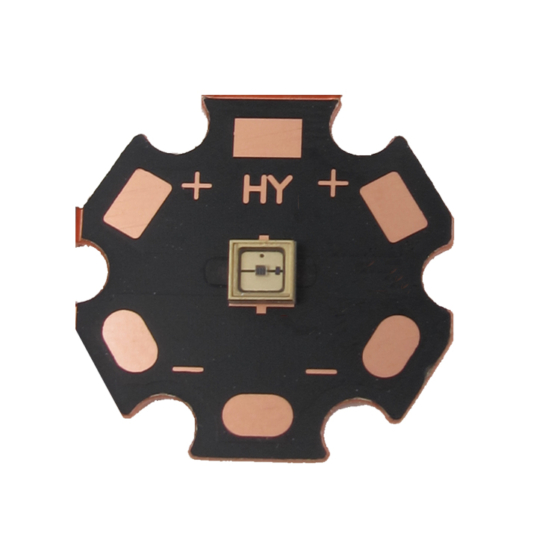
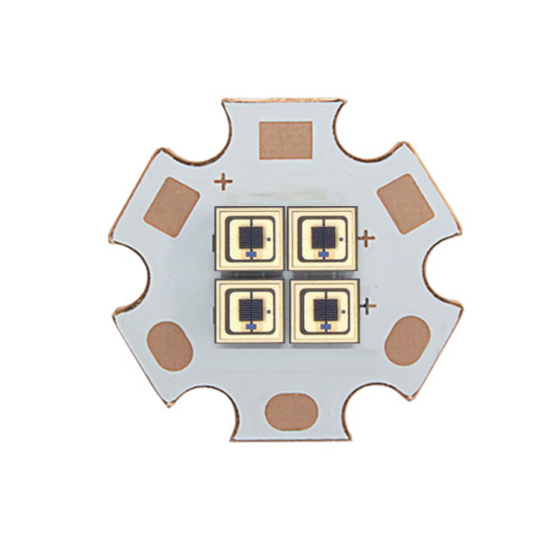
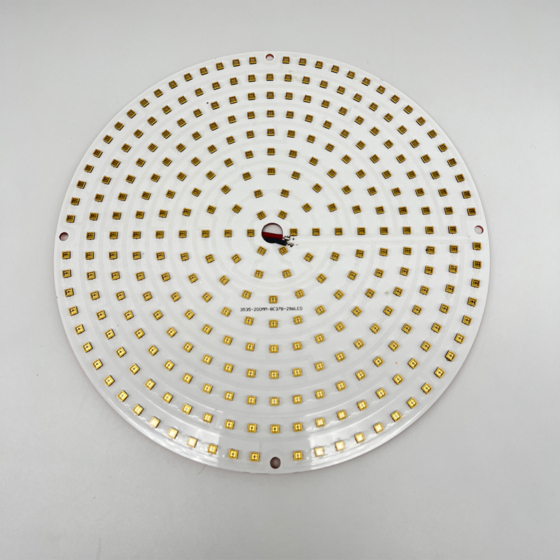
UVC LED Modules Anwendung:
| Produktmodell |
Stromspannung (V) |
Spitzenwellenlänge (nm) |
Optische Leistung (mW) |
RdiantIntensity uw/cm²(1cm) |
Aktuell (mA) |
Spektrumhälfte (nm) |
Winkel |
| HYE35P20F250AG-P1 | 5.5-6.0 | 250-260 | 25-30 | 2718 | 150 | 11 | 120 |
| HYE35P20D250AG-P1 | 5.5-6.0 | 250-260 | 30-35 | 2278 | 150 | 11 | 120 |
| HYE35P20F260AG-P1 | 5.0-5.5 | 260-270 | 30-35 | 3244 | 150 | 11 | 120 |
| HYE35P20F270AG-P1 | 5.0-5.5 | 270-280 | 30-35 | 4560 | 150 | 11 | 120 |
| HYE35P22D270AG-P1 | 5.0-5.5 | 270-280 | 80-90 | 6144 | 250 | 11 | 120 |
| HYE35P30F250AG-P1 | 5.5-6.0 | 250-260 | 50-60 | 5571 | 350 | 11 | 120 |
| HYE35P30F260AG-P1 | 5.0-5.5 | 260-270 | 50-60 | 5546 | 350 | 11 | 120 |
| HYE35P30F270AG-P1 | 5.0-5.5 | 270-280 | 50-60 | 5571 | 350 | 11 | 120 |
| HYF38P20F250AG-D1 | 5.5-6.0 | 250-260 | 25-30 | 9177 | 150 | 11 | 120 |
| HYF38P20D250AG-D1 | 5.5-6.0 | 250-260 | 30-35 | 8727 | 150 | 11 | 120 |
| HYF38P20F260AG-D1 | 5.0-5.5 | 260-270 | 30-35 | 10301 | 150 | 11 | 120 |
| HYF38P20F270AG-D1 | 5.0-5.5 | 270-280 | 30-35 | 11814 | 150 | 11 | 120 |
| HYF38P22F270AG-D1 | 5.0-5.5 | 270-280 | 80-90 | 23550 | 250 | 11 | 120 |
| HYF38P30F250AG-D1 | 5.5-6.0 | 250-260 | 50-60 | 26744 | 350 | 11 | 120 |
| HYF38P30F260AG-D1 | 5.0-5.5 | 260-270 | 50-60 | 28038 | 350 | 11 | 120 |
| HYF38P20F250AG-S1 | 5.5-6.0 | 250-260 | 25-30 | 10515 | 150 | 11 | 30 |
| HYF38P20D250AG-S1 | 5.5-6.0 | 250-260 | 30-35 | 15972 | 150 | 11 | 30 |
| HYF38P20F260AG-S1 | 5.0-5.5 | 260-270 | 30-35 | 11874 | 150 | 11 | 30 |
| HYF38P20F270AG-S1 | 5.0-5.5 | 270-280 | 30-35 | 21872 | 150 | 11 | 30 |
| HYF38P22D270AG-S1 | 5.0-5.5 | 270-280 | 80-90 | 43160 | 250 | 11 | 30 |
| HYF38P30F250AG-S1 | 5.5-6.0 | 250-260 | 50-60 | 35123 | 350 | 11 | 30 |
| HYF38P30F260AG-S1 | 5.0-5.5 | 260-270 | 50-60 | 35007 | 350 | 11 | 30 |
| HYF38P30F270AG-S1 | 5.0-5.5 | 270-280 | 50-60 | 35407 | 350 | 11 | 30 |
Wärmehinweis: The company is willing to personalize your customized products.
Je größer die Bestrahlungsdosis, desto höher ist die Desinfektionseffizienz.
Je höher die UVB-Lichtleistung, desto kürzer ist die Zeit, die zum Abtöten von Bakterien und Viren erforderlich ist, und umgekehrt, desto geringer ist die Lichtleistung,Je länger die Sterilisation dauert.